Limbiko. The new input device.
The Team
Why?
Movement. Purpose. Health.
Unite your movement with your work.
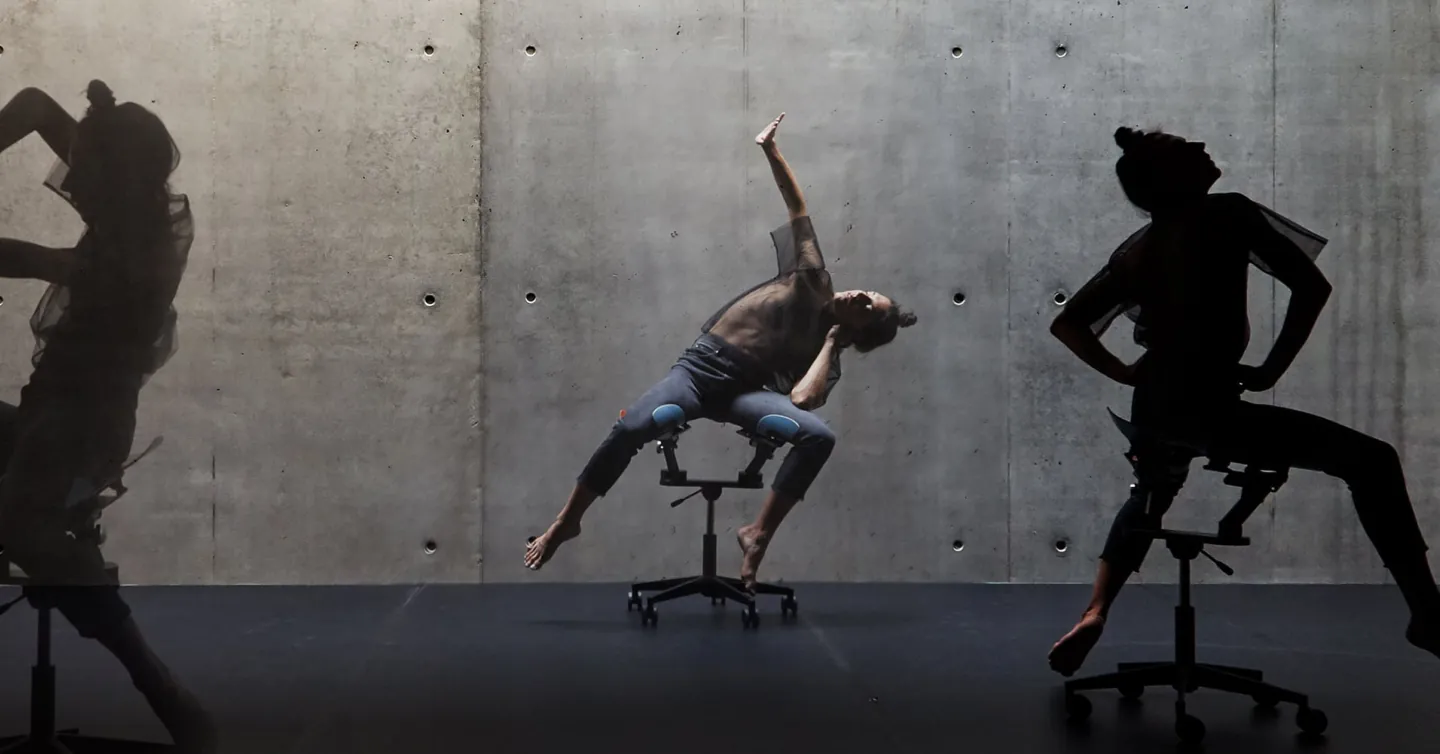
How many hours will you sit today? The movements that make people happy and help you focus have not changed for hundreds of years. We integrate these for you into your daily workflow and empower you with movement.
Nothing to lean on, because nothing is holding you back.

Founder & CEO
Dr. Patrik Künzler
The Neuroscientist who accessed the limbic system with an input device.
Medical doctor, University of Zurich, then MIT. He won his first research prize, at nineteen in the lab of Walter Schaffner, for a new variant of the enhancer-trap, the switch that decides when a gene is expressed. That work became the first of several scientific publications. Schaffner switched on his inner child and he could never switch it off again. Patrik looks at any problem the way a child does, curious, with no preconceived notions. He read race-car suspension and aerodynamics books to unwind, machines have always talked to him — they have souls, they dance, they behave naughty or nice.
Then MIT: nine years as a research scientist in the lab of Nobel Laureate Susumu Tonegawa, investigating how mental states alter memory and decision-making functions. Takagaki, a mentor in Tonegawa’s group, taught him: don’t look at the mountain, look at every step. Molecular biology taught him the rest — you learn from everyone, and you never hoard what you know.
At the MIT Media Lab, with his thesis advisor Bill Mitchell he asked the question this company still runs on: can we design from love? Mitchell held architecture, computation and the city in a single thought, and made Patrik stop apologising for working across fields. Neil Gershenfeld put the machines in his hands — if you cannot build it, you do not understand it. He took that to the Ferrari innovation team in Maranello as a human interface specialist, and to Volkswagen.
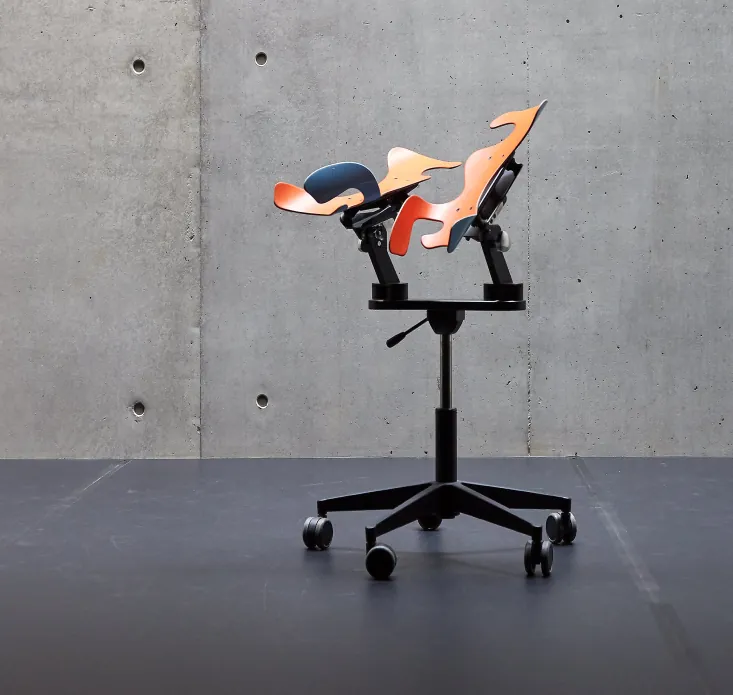
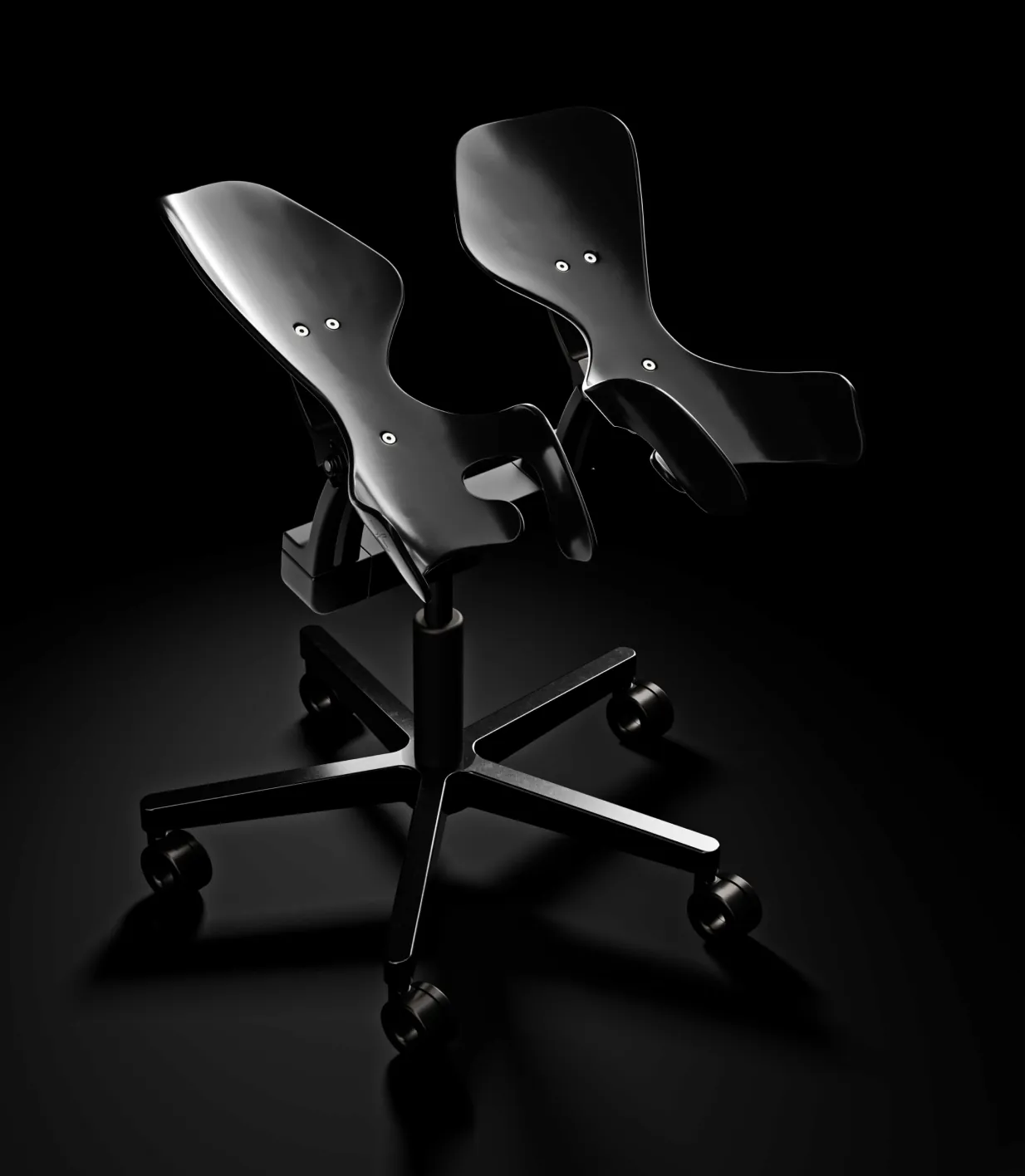
Nine patents sit behind the work: wheel-embedded car suspension (remember the books?), ways to use your body as an input device, and a digital fabrication assembler. On his return to Switzerland, Patrik created the Limbic Chair, the first chair to combine neuroscience with ergonomics: free the pelvis and legs to move independently, and stimulate the limbic system instead of immobilising the body against it. CHF1.6M in sales of a very premium product proved the concept and tested markets as an input device. Medicine, neuroscience, engineering, the obsession underneath them is movement, combining our brain and body.
He made Limbiko.

Design & industrialisation
Andreas Krob
Professional seating since 1995, at the edge of ergonomics and engineering.
Andreas Krob has been working on innovative solutions in the field of professional seating since 1995.
Andreas was born in northern Germany; he first studied civil engineering and later switched to industrial design. At the intersection of ergonomics, design, and engineering, he has been developing product ideas for companies worldwide—first as a full-time employee in the industry and, for the past 23 years, through his own studio.
Studio B4K stands for holistic development solutions. In addition to classic design themes, innovation research and engineering are essential elements of the work process.
Andreas focuses on professional seating solutions: swivel chairs for the workplace, conference chairs, and open-plan office seating. An ergonomic approach is always at the forefront of all product ideas. The movements often associated with these designs are achieved using proprietary mechanisms. For several years now, he has been increasingly focusing on deformable plastic geometries that combine statically rigid, flexible, and energy-storing areas. These patented components replace conventional parts and enable entirely new patterns of movement.
Clients include Sunon, Auora, Huy, Teknion, Sinux AG, Interstuhl, Wiesner Hager, Thonet, Bene, Okamura, Koleksiyon, Halcon, Bernhardt Design, Nowystyl, Sitag, ClassiCon, Ofita, mdd, Kymo, Köhl, skimbowl, Stilo, Martin Stoll, Samas, Max Hauri, Sitemotion, Nanoo, Froli, Kano, Cosy King, Forma 5, and Zode.
He made it ship.

Product & interface
Bianca Cheng Costanzo
She has already invented Apple’s haptic trackpad. It shipped hundreds of millions.
She invented the haptic trackpad and led its development at Apple. Bianca was born in Brazil to a Chinese mother and Italian father; she speaks seven languages fluently. She studied Computer Science at MIT and worked in the MIT Media Lab’s Tangible Media Group under Hiroshi Ishii — the lab that invented the discipline of physical, embodied interfaces. Ishii’s mission was always to create interfaces that liberate us from the “pixel empire.”
At the Harvard GSD, she took classes in theory of modern design, where she was deeply inspired when meeting Alessi industrial designer Michael Graves. He told the story of his experience of becoming paraplegic, the depth of which she realized years later when she suffered a spinal injury. The sudden absence of the function of her body deepened her understanding of design.
Then Apple. Designer and prototyper in Apple’s Human Interface Device Prototyping Group: seven people inventing interactions for hardware that did not exist yet. Nine issued US patents came out of those years, the core of them covering Force Touch and the Taptic Engine: continuous haptic and visual feedback mapped to the force a user applies. The haptic trackpad in every MacBook is her work.
She left Apple to found Bloom Blanket: a textile design studio inspired by origami and based in mathematics. The project was funded on the most successful Kickstarter campaign in Spain at the time. Geometry, materials, European manufacturing and a paying market — end to end, by one person.
After Bloom, Bianca worked in deep tech and created interfaces for exploring music with spatial audio, for which she holds another patent. She is a pianist, composer and singer, performing internationally with her creative technology installations, bossa nova collaborations, and neo-soul quartet. Force, texture, sound in space, Limbiko: the obsession underneath all of it is making the digital world sensory.
She made it click.
Take control
Move the chair. Move the interface.
Body Live Stream
Gesture Detected
The doorway
Not a furniture item. A doorway.
Limbiko Ecosystem Strategy
Hardware sold once, a subscription that keeps earning, extended by apps bought per use case.
One Subscription, Three Pillars.
Out of the box, the Limbiko works as
Input device
The chair becomes the controller. Point, click, scroll and zoom with the whole body — no hands, no mouse.
Fitness & body
Every hour at the desk becomes movement. Posture and micromovements tracked without a training session.
Fun
Games and motion that make the chair the thing you sit in on purpose — outside of work.
The Raise
The Raise
More information upon request.
Revenue Model
Chairs will be produced in Asia and shipped to our distribution partners worldwide. These are suppliers of office furniture who will sell the chairs in their respective markets.
Our chair-based revenue will be derived from the markup we charge to our distributors.
Electronics are developed in house, so the subscription and the apps that run on them are recurring revenue that comes straight to Limbiko.
Bianca, who invented the haptic trackpad at Apple, has developed iOS apps since the first iPhone and is familiar with planning and scaling this type of ecosystem.
Over time, the majority of our revenue will be recurring revenue from subscription and app sales.
This is a first in the furniture market.
We are creating a market that has never existed before.
Assumptions
- Revenue per chair sold
- CHF150
- Subscription, per month
- CHF6
- Subscription adoption, of chair buyers
- 90%
- App spend, per subscriber per year
- CHF75
| Year | Chairs Sold | Revenue Chairs | Revenue Subscriptions | Revenue Apps | Total | Recurring % of Revenue |
|---|---|---|---|---|---|---|
| 1 | 5,000 | 750,000 | 162,000 | 225,000 | 1,137,000 | 34.0% |
| 2 | 20,000 | 3,000,000 | 955,800 | 1,234,575 | 5,190,375 | 42.2% |
| 3 | 55,000 | 8,250,000 | 3,305,610 | 3,787,678 | 15,343,288 | 46.2% |
| 4 | 120,000 | 18,000,000 | 8,721,230 | 8,721,230 | 35,442,459 | 49.2% |
| 5 | 250,000 | 37,500,000 | 20,078,768 | 17,150,614 | 74,729,382 | 49.8% |
| 6 | 500,000 | 75,000,000 | 42,969,830 | 32,525,774 | 150,495,603 | 50.2% |
| Total | 950,000 | 142,500,000 | 76,193,237 | 63,644,871 | 282,338,108 | 49.5% |
All numbers have been researched referencing key furniture products and App store sales. Detailed go to markert strategy available upon request.
The Round
We are looking for strategic partners to join our next funding round.
Funding categories
What the round buys
- Limbiko input device shipping for the mass market.
- Manufacturing and distribution with international partners.
- Application ecosystem and lighthouse application suite.
- Preferred conditions for lead investor.
Getting Into Apple
The Limbiko is a Bluetooth input device. Our drivers work on Apple computers without the necessity of app reviews.
The App Store adds reach for mobile devices.
Our subscription model is protected by Apple’s developer guidelines
Guideline 3.1.4 lets hardware-dependent features unlock without in-app purchase.
3.1.4 Hardware-Specific Content: In limited circumstances, such as when features are dependent upon specific hardware to function, the app may unlock that functionality without using in-app purchase (e.g. an astronomy app that adds features when synced with a telescope). App features that work in combination with an approved physical product (such as a toy) on an optional basis may unlock functionality without using in-app purchase, provided that an in-app purchase option is available as well. You may not, however, require users to purchase unrelated products or engage in advertising or marketing activities to unlock app functionality.
We integrate with
macOS
We distribute our apps on our website with our Apple Developer ID.
No store, no review, no commission.
iOS & iPadOS
App Store only. The subscription lives under guideline 3.1.4, so it is not an in-app purchase.
À la carte apps sell at 15% commission until we pass $1M in sales, then 26%.
watchOS
Ships directly onto the watch via the iPhone app.
If we’re rejected by the App Store
We still have full desktop integration on macOS.
We will escalate through our contacts at Apple.
We can distribute iOS and iPadOS apps ourselves within the EU by new regulation.
Android and Windows
Easier entry points.
Android
How we get in
Bluetooth input devices are native. Google Play carries the apps; Samsung’s store and a direct install carry everyone Play does not reach.
Commission
Sold on our own site and activated in the app by the chair itself — the pattern Whoop and Oura already run. Since 30 June 2026 Play also permits linking out to our checkout: 10% on auto-renewing subscriptions, and no billing fee outside Google’s own.
Risks
From late 2026 Google requires developer verification for apps installed outside Play.
Windows
How we get in
No store, no review, no approval — a signed installer on our own site is the entire path to market.
Commission
0%. The Microsoft Store is optional, publishing is free, and non-gaming apps that run their own commerce keep the sale. Direct download keeps 100%.
Risks
None.
Wearables
Limbiko can integrate with Apple Watch, Oura, and other wearables.
More information upon request.
A Limbiko for everyone.
Limbic Chair proved people want to move while they work; it also established a pilot version of the electronic ecosystem. Limbiko costs less, looks better, and sells as an input device to the mass market.
Then
Limbic Life : premium neuroscience-based chair. Electronics work, sales over CHF 1.6M
Now
Our new manufacturing technology called Polyketon-A enables lower-cost design
Next
Limbiko : commercialization vehicle for mass-market expansion
Our credibility lies not only in the research behind this project, but also in hundreds of chairs sold worldwide in the premium market. Here is what some of our customers say.
I love my Limbic®Chair. I typically spend 7–8 hours a day in it. Sitting used to cause me back pain, but this all but disappeared since I purchased my Limbic®Chair three years ago. The freedom of movement the Limbic®Chair provides – and the ergonomic sitting position – help me concentrate much better during demanding hours of work.
Before I had my Limbic Chair, I regularly had back pain and tension in my neck. Now I’m getting up all relaxed even after hours of sitting. As I sit down in my Limbic Chair, I can immediately feel the relief and relaxation in my back and lumbar areas.
Sitting for prolonged periods of time used to cause pain in my thighs. Sitting in my Limbic®Chair, this problem disappeared completely. My Limbic®Chair is also giving me more freedom of movement, making sitting a joyful, fun experience. I recommend the Limbic®Chair to everyone who spends a lot of their time sat down.
As an ENT specialist and phoniatrician, I rely on ergonomic and flexible working. The Limbic Chair impressed me so much that I decided to get a second chair right from the start. In my practice, I combine the examination room and office in one space. Between patient examinations, consultations, and working at my desk, I needed a chair that provides optimal support in every position. With the Limbic Chair, I’ve found exactly that. After more than a year of daily use, I wouldn’t want to be without the Limbic Chair. I sit more dynamically, move around more automatically, and stay more active. For me, it’s an investment in long-term health and performance.
Limbic Chair is the first chair in which I can sit and concentrate for long hours after my car accident ten years ago. I used to walk around during phone calls, now I am actively making calls in my Limbic Chair.